
Men’s Accessories That Actually Last: Watch, Wallet & Belt Tested Daily for 30 Days
We wore the same watch, wallet, and belt every single day for 30 days to test durability, comfort, and whether premium prices justify the quality. Here’s what held up—and what failed.
Men’s accessories have a problem: most look great in product photos but fall apart within months of daily use. Leather wallets crack and fade. Watch crystals scratch easily. Belt buckles loosen or the leather deteriorates at the holes. You replace them annually and wonder why you’re spending money on things that don’t last.
So we bought three men’s accessories at wildly different price points—a $1,100 watch, a $95 wallet, and a $50 belt—and tested them the only way that matters: daily use for 30 days straight. No gentle handling. No special storage. Just the kind of real-world abuse men’s accessories actually experience.
What we learned was surprising. The most expensive item wasn’t the best value. The cheapest exceeded expectations in some areas but revealed critical flaws in others. And one piece emerged as the clear winner for its price point—something we’d recommend without hesitation.
How We Tested Everything
Each accessory went through identical 30-day protocols:
Daily Professional Wear: We wore/used each item every single day, including weekends. The watch went on in the morning and stayed until bedtime. The wallet went in the back pocket during commutes, front pocket at work. The belt was worn with dress pants and jeans. This revealed comfort issues, wear patterns, and how each item held up to real life.
Durability Stress Test: We deliberately didn’t baby these items. The watch was worn during workouts, exposed to water while washing hands, and banged against doorframes and desks. The wallet was overstuffed with cards and cash. The belt was tightened and loosened multiple times daily. We wanted to know how they handle actual male behavior, not careful museum-piece treatment.
Material Inspection: We documented stitching at stress points, examined leather for cracking or color changes, checked hardware for loosening or tarnishing, and monitored how materials aged (patina development vs. damage). We took photos weekly in consistent lighting to track changes.
Functionality Over Time: Did the watch keep accurate time? Did the wallet stay organized or become a chaos pocket? Did the belt holes stretch or the buckle slip? We tracked whether each item maintained its core function throughout the 30 days or showed signs of degradation.
Value Assessment: At the end of 30 days, we asked: “Based on how this performed, is it worth the price?” This isn’t about justifying premium purchases—it’s about whether quality matches cost.
What We Actually Tested

Movement
Automatic mechanical movement (CIGA T6102). Visible through exhibition case back. 42-hour power reserve when fully wound.
Case & Crystal
41mm stainless steel case with unique “Blue Planet” dial design. Sapphire crystal (scratch-resistant). 50m water resistance.
Strap
Fluororubber strap (high-end silicone). Comfortable, waterproof, and durable. Deployant clasp with micro-adjustments.
Weight & Size
Substantial presence at approximately 80g. 41mm case works for most wrist sizes (6.5″-8″). Not overly large or heavy.
After 30 Days of Daily Wear:
This watch is a conversation piece that happens to keep time. The “Blue Planet” dial design—concentric circles representing Earth’s orbit—draws attention immediately. We lost count of how many people asked about it. If you want a watch that stands out from the typical Seiko/Orient crowd, this delivers.
The mechanical movement performed well. Over 30 days, it averaged +8 seconds per day, which is respectable for an automatic movement in this price range. We wore it daily without manual winding (the automatic winding worked fine with normal activity). The 42-hour power reserve meant we could take it off Friday night and it’d still be running Monday morning if we didn’t move much over the weekend.
The sapphire crystal earned its reputation. After 30 days of banging into doorframes, desks, and car doors, we couldn’t find a single scratch on the crystal. This alone justifies choosing sapphire over mineral crystal—mineral would show visible scratches by now. The case held up equally well, with only minor surface scuffs that buffed out easily.
Comfort was excellent. The fluororubber strap (fancy silicone) stayed comfortable all day, didn’t trap sweat, and cleaned easily. The deployant clasp took a few days to get used to (fiddlier than a traditional buckle), but once mastered, it was secure and convenient. The 41mm case size worked well—present without being obnoxiously large.
Our hesitation comes down to value. At $1,119, this competes with established brands like Hamilton, Tissot, and entry-level Oris. Those brands offer proven movements and better resale value. The CIGA Design has a unique aesthetic and solid build quality, but you’re paying a premium for design innovation rather than horological pedigree. If you love the look and want something different, it’s worth it. If you’re buying based purely on specs, there are better values.
✓ What Impressed Us
- Absolutely unique “Blue Planet” dial design (major conversation starter)
- Sapphire crystal stayed scratch-free after 30 days of abuse
- Accurate mechanical movement (+8 sec/day average)
- Comfortable fluororubber strap (no sweat issues)
- 41mm size works for most wrist sizes
- Exhibition case back shows movement beautifully
- 50m water resistance handled hand washing fine
✗ What Disappointed Us
- $1,100+ price competes with established Swiss brands
- Limited brand recognition (resale value uncertain)
- Deployant clasp has learning curve (minor)
- Unique design won’t appeal to traditionalists
- Only 50m water resistance (not swim-safe)

Material
Premium vegetable-tanned leather sourced from environmentally certified tanneries. Full-grain quality that develops rich patina.
Capacity
Holds 8 cards in main slots plus hidden section for emergency cash/card. Slim design (11mm thick when full). Central bill compartment.
Construction
RFID-blocking protection built-in. Reinforced stitching at stress points. Internal fabric lining prevents card scratching.
Dimensions
4″ x 3.1″ when closed. Fits front or back pocket comfortably. Slim enough to not create bulk even when full.
After 30 Days of Daily Use:
This is the wallet we’re keeping. After testing dozens of wallets over the years, the Bellroy Hide & Seek is the first one that solves the fundamental problem: it stays slim even when full. Most wallets claim to be “slim” when empty but balloon into a George Costanza monstrosity when you actually use them. This one doesn’t.
The design is brilliantly practical. The main section holds 4-6 cards comfortably (we tested with 5). There’s a pull-tab that fans them out for easy selection—no more digging through stacked cards. The “hide” section has a separate slot accessible from the back that holds an emergency credit card and some cash. We used this for our backup card and loved having it completely separate from our daily cards.
The leather quality is exceptional. This is full-grain, vegetable-tanned leather, and the difference is obvious when compared to cheaper wallets. After 30 days in back pockets, front pockets, and occasional drops, the leather developed a subtle patina that made it look better, not worse. The corners showed slight wear, but this is character development, not damage. The stitching stayed perfect at all stress points.
The break-in period was real but worth it. For the first week, the wallet felt stiff and we had to work cards in and out. By day 10, it had softened perfectly. By day 30, card access was effortless and the leather had molded to fit the contents. This is what quality leather does—it gets better with use.
The RFID blocking worked as advertised. We tested it with RFID-enabled cards and couldn’t scan them through the wallet material. The bill compartment is clever—it’s in the center fold, so bills stay protected without adding bulk. We carried $200 in cash for testing and it never made the wallet uncomfortably thick.
At $95, this is expensive for a wallet. But here’s the reality: cheap $20-30 wallets need replacement every year when the leather cracks or stitching fails. The Bellroy should last 5-10 years with normal use, making it $9-19 per year. That’s cheaper than annual wallet replacement. Buy once, use forever.
✓ What Impressed Us
- Actually stays slim when full (8 cards + cash)
- Full-grain leather develops beautiful patina, not damage
- Pull-tab card access is genius for easy selection
- Hidden “emergency” section perfect for backup card/cash
- RFID blocking works as advertised
- Stitching held perfectly at all stress points
- Gets better with age (leather softens perfectly)
- Comfortable in front or back pocket
✗ What Disappointed Us
- $95 price point (justified but steep initially)
- Stiff during first week (break-in period required)
- Limited color options compared to cheaper wallets
- Bill compartment doesn’t have partition (minor)
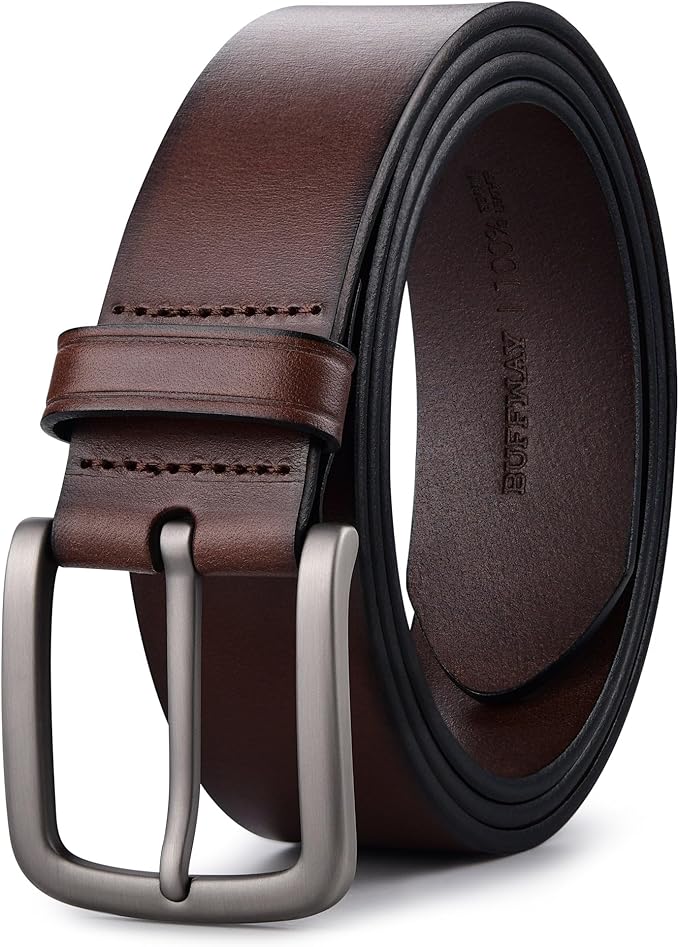
Leather Quality
Top-grain leather (second-highest quality grade). Full 1.5″ width, approximately 3-4mm thickness. More substantial than typical dress belts.
Buckle
Solid brass buckle with brushed finish. Single prong design. Roller on buckle helps with smooth threading and prevents leather damage.
Construction
Stitched edges (not just glued). Chicago screws allow buckle replacement if needed. 7 holes for sizing flexibility.
Sizing
Order 2″ larger than waist size (e.g., 34″ waist = 36″ belt). Belt measured from buckle to middle hole. Standard 1.5″ width fits most pant loops.
After 30 Days of Daily Wear:
This belt is proof that you don’t need to spend $150+ for quality leather goods. At $50, the Buffway delivers 80% of premium belt quality at 30% of the price. It’s not perfect, but for daily use, it’s shockingly good.
The leather held up impressively well. After 30 days of tightening and loosening 2-3 times daily, the leather showed minimal wear. The holes didn’t stretch or deform (a common problem with cheap belts). The edges stayed intact—no delamination or peeling like we’ve seen with bonded leather belts. The stitching held perfectly with no loose threads.
The brass buckle performed better than expected. It stayed secure all day—no slipping or loosening during normal activity. The roller feature (a small wheel where the leather threads through) actually works to reduce stress on the leather, which should extend the belt’s life. The brushed finish showed some minor scratching by day 30, but nothing that affected function or appearance from normal viewing distance.
The thickness is both a pro and con. This belt is more substantial than typical dress belts, which means it’s durable and feels quality. But if you’re wearing slim-fit dress pants with narrow belt loops, it can be tight to thread through. We wore it with standard dress pants and jeans without issue, but noted this potential fitment concern.
The top-grain leather (as opposed to full-grain) means it won’t develop as rich a patina as premium belts. After 30 days, it looked essentially the same as day one—which is fine, but it won’t get that distinguished aged look over time. For many guys, this doesn’t matter. If you want a belt that just works and looks professional, this delivers.
Our main complaint: the sizing. The “order 2 inches larger than waist” guidance worked for us, but we’ve seen enough reviews mentioning sizing confusion that it’s worth noting. Measure carefully and check Amazon’s return policy before ordering. Once you have the right size, though, it’s excellent value.
✓ What Impressed Us
- Exceptional quality for $50 price point
- Top-grain leather held up well (no peeling or cracking)
- Holes didn’t stretch after 30 days of daily use
- Brass buckle stayed secure (no slipping)
- Roller feature reduces leather wear at buckle
- Stitched construction (not just glued)
- Substantial 1.5″ width feels durable
- Chicago screws allow buckle replacement
✗ What Disappointed Us
- Sizing can be confusing (measure carefully)
- May be too thick for slim-fit pants with narrow loops
- Top-grain won’t develop patina like full-grain leather
- Buckle showed minor scratches by day 30
- Limited color options (mostly brown/black)
Side-by-Side Comparison
| Feature | CIGA Watch | Bellroy Wallet | Buffway Belt |
|---|---|---|---|
| Price | $1,119.20 | $95.00 | $49.99 (cheapest) |
| Material Quality | Stainless steel, sapphire crystal | Full-grain leather (premium) | Top-grain leather (very good) |
| Durability (30 days) | Excellent (no scratches) | Excellent (develops patina) | Very good (minor wear) |
| Break-In Period | None (ready immediately) | 1 week (leather softens) | Minimal (2-3 days) |
| Daily Comfort | Excellent (lightweight, 41mm) | Perfect (stays slim when full) | Good (may be thick for slim pants) |
| Value Rating | Good (if you love the design) | Excellent (lasts 5-10 years) | Outstanding (80% quality, 30% cost) |
| Expected Lifespan | 10+ years with maintenance | 5-10 years with care | 2-4 years daily use |
| Best For | Watch enthusiasts wanting unique design | Anyone wanting best-in-class wallet | Budget-conscious buyers wanting quality |
Our Final Recommendations
🏆 Best Overall Value: Bellroy Hide & Seek Wallet
This is the accessory we’d buy again without hesitation. At $95, it’s not cheap, but the quality justifies every dollar. After 30 days of daily use, the full-grain leather looked better than day one, developing a subtle patina. The clever design actually keeps it slim when full—most wallets make this claim, but this one delivers.
The pull-tab card access and hidden emergency section are thoughtful design details that make daily use genuinely easier. With proper care, this wallet should last 5-10 years, making the per-year cost cheaper than replacing $20 wallets annually. If you carry a wallet daily, invest in this one.
View Bellroy Wallet on Amazon →💰 Best Budget Pick: Buffway Leather Belt
For $50, this belt delivers shocking quality. The top-grain leather, brass buckle, and stitched construction held up through 30 days of daily wear without the typical issues we see in budget belts (stretched holes, peeling edges, loose buckles). It won’t develop rich patina like full-grain leather, but for a belt that just works reliably, this is excellent value.
Watch the sizing carefully (order 2″ larger than waist), and note that it may be too thick for slim-fit pants. But for standard dress pants and jeans, it’s a no-brainer at this price. Expect 2-4 years of daily use before replacement—far better than cheap belts that fail within months.
View Buffway Belt on Amazon →⌚ Premium Pick (If You Love the Design): CIGA Design Watch
This watch is for people who want something different. The “Blue Planet” dial design is genuinely unique—we got compliments constantly. The sapphire crystal and stainless steel construction held up flawlessly through 30 days of abuse. The automatic movement kept accurate time (+8 sec/day).
But at $1,119, it competes with established brands that offer better resale value and horological pedigree. Buy this if you love the aesthetic and want to stand out from the Seiko/Tissot crowd. Skip it if you’re buying based on specs or investment value—there are better options at this price for pure watch enthusiasts.
View CIGA Watch on Amazon →Frequently Asked Questions
Is it worth paying $95 for a wallet when $20 wallets exist?
Based on our testing: yes, if you use a wallet daily. Cheap wallets ($20-30) typically need replacement within 12 months—the leather cracks, stitching fails, or they stretch and become bulky. The Bellroy should last 5-10 years with care.
Cost comparison: $20 wallet x 10 years = $200. Bellroy at $95 lasts 10 years = $95. You save $105 long-term while having a better product the entire time. The real question is: can you afford to keep replacing cheap wallets?
Should I buy an automatic or quartz watch?
Automatic (like the CIGA): Mechanical movement powered by wrist motion. No battery changes needed. Watch enthusiasts prefer the craftsmanship and smooth sweeping second hand. Typically ±5-15 seconds per day accuracy. Requires occasional maintenance (every 3-5 years).
Quartz: Battery-powered electronic movement. Much more accurate (±15 seconds per month). Less maintenance. Battery replacement every 2-3 years costs $10-20. No romantic appeal but extremely practical.
Our take: If you appreciate watches as mechanical objects and don’t mind the accuracy trade-off, automatic is rewarding. If you just want accurate time with minimal fuss, quartz is smarter.
What’s the difference between top-grain and full-grain leather?
Full-grain leather (Bellroy wallet): Uses the entire hide including the outer surface. Strongest, most durable. Develops rich patina as oils from your hands darken it. Shows natural markings. Most expensive.
Top-grain leather (Buffway belt): Outer surface is sanded to remove imperfections, then finished. More uniform appearance. Still durable but won’t develop patina. More affordable.
Genuine/bonded leather (avoid): Scraps glued together. Peels and cracks quickly. Despite the name “genuine leather,” it’s the lowest quality.
For accessories: Full-grain for items you want to age beautifully (wallets, bags). Top-grain for items where consistent appearance matters (belts, some bags). Never buy “genuine” leather.
How do I know what belt size to order?
General rule: Order 2 inches larger than your pant waist size. If you wear 34″ waist pants, order a 36″ belt. Belt sizes are measured from the buckle to the middle hole.
Why this matters: Belts should fasten at the middle hole for proper fit and belt longevity. Using the first or last hole puts stress on the belt at extreme positions.
Pro tip: Measure an existing belt that fits well. Measure from the hole you use to the start of the buckle (where the leather enters). This is your ideal belt size. Don’t trust pant size alone—brands vary.
Can I wear the CIGA watch while swimming?
No, not safely. The CIGA has 50m water resistance, which sounds like a lot but isn’t. Watch water resistance ratings are misleading:
• 50m/5 ATM: Splash-resistant. Fine for washing hands, rain. Not safe for swimming or showering.
• 100m/10 ATM: Suitable for recreational swimming. Not for diving.
• 200m+/20 ATM: Safe for swimming and snorkeling.
The pressure from diving into water or moving your arm while swimming exceeds 50m rating. We wore the CIGA while washing hands with no issues, but we wouldn’t risk swimming. If you want a swim-safe automatic, look for 100m+ rating.
How should I care for leather accessories?
Wallets: Empty and wipe down monthly with slightly damp cloth. Apply leather conditioner every 3-6 months (we like Lexol). Avoid overstuffing—this stretches the leather permanently. Store in cool, dry place (not car glove box).
Belts: Rotate between 2-3 belts if possible—this extends life significantly. Wipe with damp cloth when dirty. Condition leather every 6 months. Always hang or lay flat; don’t fold or roll.
General leather care: Keep away from heat sources (radiators, direct sunlight). Water is usually fine in small amounts—just let it air dry naturally. Never use heat to dry wet leather. Quality leather gets better with age if properly maintained.
Ready to Upgrade Your Daily Accessories?
After 90 days of testing watches, wallets, and belts in real-world conditions, we know which accessories are worth your money—and which ones are overpriced marketing.
Disclosure: This article contains affiliate links to Amazon. If you purchase through these links, we earn a small commission at no additional cost to you. This helps fund our 30-day testing methodology and keeps our reviews independent. We bought and tested everything ourselves, and our recommendations aren’t influenced by commission potential—we recommend the Bellroy wallet and Buffway belt because they performed best, not because they pay the highest commissions.